Nikolai Slyunkov
Voices from ChernobylNikolai Slyunkov appears in the testimony as a senior Communist Party official confronted with specific warnings about the fallout from the Chernobyl disaster. A physicist repeatedly tries to get him to act on measurements and forecasts: evacuate people near the station, provide iodine prophylaxis, and treat the danger as an emergency. Slyunkov instead invokes reports that the fire has been extinguished and assurances from Moscow. The account does not give access to his private thoughts; it presents him through these exchanges, making his significance lie in the choices and institutional habits his position brings into view.
Position and first warning
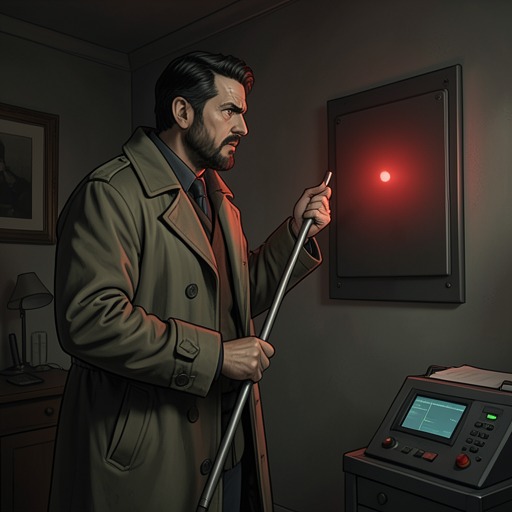
On April 26, the day of the accident, the scientist was in Moscow on business. He tried repeatedly to reach Slyunkov in Minsk, first through the usual channels and then through an assistant who knew him. The scientist emphasized that the information was urgent. Yet, he recalled, the government telephone line went dead whenever he began discussing the accident. He understood this interruption as evidence that the calls were being monitored and blocked, though even his position as director of the Institute for Nuclear Energy of the Belarusian Academy of Sciences did not secure him access.
After roughly two hours, he finally reached Slyunkov. By then he had spoken with people in Moscow and estimated that the radioactive cloud was moving toward Belarus. His recommendation was immediate: iodine prophylaxis for the population and evacuation of everyone near the station, with no person or animal remaining within 100 kilometers. Slyunkov replied that reports had already reached him and that there had been a fire, but it had been put out. The scientist rejected that reassurance on physical grounds, arguing that burning graphite could not be dismissed as a brief, contained fire. The exchange establishes the central conflict: Slyunkov had received the warning, but the evidence available to the scientist did not support the official account.
Escalating evidence and delayed access
After taking the first train to Minsk, the scientist measured his son’s thyroid at 180 micro-roentgen per hour and concluded that the child needed iodine. He stressed that ordinary iodine could serve as prophylaxis, but the advice was not acted upon. On April 27, he travelled to the Gomel Region, visiting Bragin, Khoyniki, and Narovlya, towns only 20 to 30 kilometers from the station. His instruments recorded 30,000 micro-roentgen per hour in Bragin and 28,000 in Narovlya. Yet people were sowing, mowing, and preparing for Easter; they had received no warning or evacuation order. Their routine continued alongside readings that, to the physicist, made the danger unmistakable.
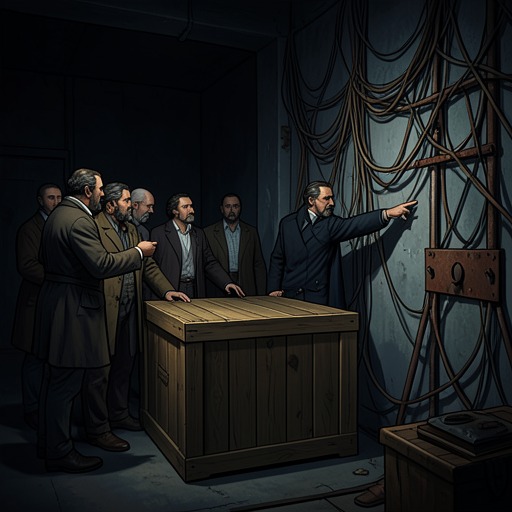
He returned to Minsk and tried again to see Slyunkov. On April 29, he sat in the reception area from 8 a.m. until 5:30 p.m. Before he was admitted, a poet emerged from Slyunkov’s office after a discussion of Belarusian culture. The physicist interrupted the complacency of that meeting with the argument that culture itself would have no future if people were not evacuated. When he finally saw Slyunkov, he reported what he had observed and repeated the need to save the population, noting that evacuation had begun in Ukraine.
Official assurances and competing priorities
Slyunkov answered by challenging the conduct of the scientists: he asked why they were moving through the city with dosimeters and frightening people. He said he had consulted Moscow, including Professor Ilyin, chairman of the Soviet Radiological Protection Board, and had been told that conditions were normal. He also cited the Government commission at the station and the army’s deployment of military equipment. These assurances and measures did not answer the physicist’s central concern about what the radiation readings meant for the public.
The physicist set those readings against the scale of the release: thousands of tons of radioactive substances, an estimated 450 types of radionuclides, and an overall release he compared to 350 atomic bombs dropped on Hiroshima. He argued that officials should have been discussing the laws of physics and the consequences of contamination, rather than searching for enemies. He also reminded Slyunkov that he had once directed a tractor factory. The contrast was not simply between a specialist and someone without scientific training; it was between an official able to receive expert warnings and a political system that subordinated those warnings to other priorities.
In the scientist’s interpretation, Slyunkov’s conduct reflected the discipline of a hierarchy in which officials avoided risking their standing by acting independently. He notes that Slyunkov was then being called to Moscow for a promotion, and speculates that pressure from higher authorities to prevent panic may have shaped the response. The account does not establish that such a call occurred; it presents the prospect of advancement and the pressure to please superiors as part of the scientist’s explanation for why warnings were resisted. He describes the resulting failure less as a coordinated conspiracy than as a convergence of ignorance and obedience.
Public danger and private protection
The testimony contrasts official reassurances with the unequal precautions available to those in power. The scientist says he had information that senior officials were taking iodine and quietly getting their children out of the contaminated area. He also reports that officials had gas masks and special clothing when they entered it, while ordinary people lacked such protection, and that a specially monitored herd and protected agricultural resources were maintained near Minsk. These claims are presented as the scientist’s account of privileged access, not as actions he attributes individually to Slyunkov.
The contrast was sharpened by the public message from Mikhail Gorbachev that immediate measures had been taken. The scientist says he believed that reassurance despite his engineering experience and his understanding that people should leave the area, at least temporarily. His account locates that belief in a postwar generation formed by faith in the Soviet system and its victory in the Second World War. In this context, Slyunkov’s reliance on assurances from Moscow becomes part of a wider pattern: official confidence could persist even as instruments, field observations, and medical measurements contradicted it.
Political consequence and narrative role
The physicist says that Slyunkov was able to describe the situation to others in fifteen minutes as under control, and that this performance earned praise for handling matters without outside help. By contrast, officials in Ukraine were seeking money, medicine, and radiation-measuring equipment. The account asks what that praise cost in human lives, turning Slyunkov’s brief report into a measure of how political approval could reward reassurance over disclosure.
The testimony does not assign Slyunkov personal responsibility for every later act of suppression. It describes the physicist sending maps, measurements, and four folders of reports, each 250 pages long, through the chain of command; one set of folders disappeared from his office. The Institute’s radiation-measuring equipment was confiscated, and threatening calls urged him to stop alarming the public. These events show how expert evidence could be obstructed, but the account does not identify Slyunkov as the person who ordered them. His narrative role is instead that of a consequential recipient of warnings: the official whose repeated reliance on institutional assurances reveals how the state’s control of information and fear of political risk could delay action even when the danger had been measured and explained.